


Kango
3.960.00 Reviews
App Specs
- Version
- Varies with Device
- Updated On
- License
- Free
- Downloads
- 10,000+
- Developer
- DoLightful, Inc
- Categories
- Parenting
- Platform
- Android
Screenshots

 Analysis by AppCompare
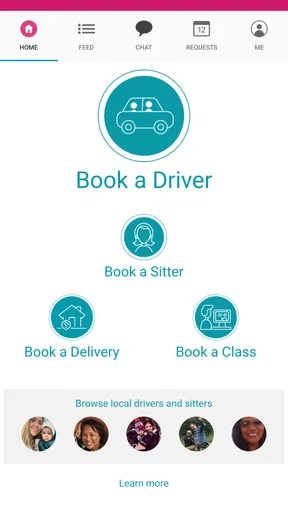
I found Kango most useful when I treated it as a practical coordination tool rather than a complete replacement for every family-service option. It is a free parenting app from DoLightful, Inc., built around rides, childcare, and carpools. That combination makes it relevant to parents who are constantly matching school schedules, work commitments, activities, and trusted help.
My first impression was that its appeal comes from bringing several everyday problems into one place. Instead of handling a ride in one conversation, childcare in another, and a carpool arrangement somewhere else, the app is designed around those connected needs. That does not remove the planning involved, but it can make the process easier to organize when a family’s week changes repeatedly.
The app is available for users on a compatible operating system, is marked for Everyone, and does not require a purchase to get started. Its current audience is still relatively modest, with over ten thousand installs, so I would not assume that every neighborhood or school community already has an active network on it. That point matters more than the download itself: a family-service app is only as useful as the people available in the places and time windows you need.
How Kango fits into real family routines
I find Kango easiest to judge by looking at one household routine at a time: who needs help, what the handoff involves, and which adult remains responsible for confirming the plan. A small, familiar use case can show whether rides, childcare, or a carpool genuinely reduce back-and-forth without making the family’s schedule harder to track. That practical test also brings account boundaries into focus.
A useful home for rides, care, and shared schedules
Parents often do not have one isolated transportation problem. A child may need a school pickup, an afternoon activity may finish after the workday begins, and a younger sibling may need supervision at the same time. Kango’s focus on rides, childcare, and carpools recognizes that these tasks overlap. I like that practical framing because it reflects how family logistics actually work.
A realistic use case would be a parent who has to remain at work while a child finishes an after-school activity. Rather than asking several contacts individually whether anyone can help, the parent can use the app as the starting point for arranging the ride or care need. If the family also participates in a carpool, the same service category is relevant to the wider weekly plan.
The strongest benefit is not simply having another messaging destination. It is the possibility of turning an urgent, scattered request into a repeatable routine. A parent can think in terms of recurring school runs, occasional childcare, or shared transport instead of rebuilding the entire arrangement from scratch each time. That makes the app particularly interesting for households whose schedules are busy but predictable enough to plan around.
Worth Reading Before You Choose

EA SPORTS FC Mobile 26 Is a Bigger Football Game, but It Takes Time

Flipboard Shows What News Apps Must Do Beyond the Feed

Switching to Android Auto Means Rethinking Your Driving Routine

Google Calendar Makes a Crowded Week Easier to Manage

Ludo King Makes the Most of the Minutes Between Plans

Baby Panda World Brings Quick Play to Modern Phones, but Its Game Library Feels Busy
Where the app is most helpful
I would recommend trying it first during a normal week rather than waiting for a crisis. A calm test lets you see whether the available options fit your child’s school, activities, preferred times, and local community. It also gives you a chance to understand how much advance planning is comfortable before you depend on it for an important pickup.
One practical approach is to map the week before opening the app. Write down the fixed commitments, identify the gaps, and separate transportation needs from supervision needs. A ride may solve the distance problem but not the period before an activity begins. Childcare may solve supervision but not the journey home. Thinking through those distinctions helps prevent choosing a service type that looks close to the solution but leaves part of the problem unresolved.
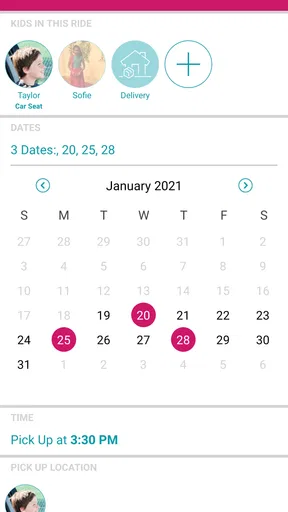
Another useful habit is to use the app for coordination, not for last-second improvisation whenever possible. Family transport has consequences if something changes, so I would confirm the exact day, time, pickup point, destination, and child-specific details before relying on an arrangement. This is not a criticism unique to Kango; it is the basic trade-off of using a digital service for responsibilities that affect children.
The experience for parents and children
For a parent, the appeal is convenience and visibility. A centralized service can be easier to revisit than a long thread of texts, especially when several adults are involved. For a child, the important result is consistency: knowing who is handling a pickup, where the handoff occurs, and what happens if the usual plan changes.
I would not treat the app as something a child should manage independently. The adult remains responsible for checking arrangements, communicating expectations, and making sure the plan suits the child’s age and needs. The Everyone content rating describes the app’s broad audience, but it does not replace a parent’s judgment about supervision or suitability for a particular family situation.
Families with children who need special accommodations should also think through the practical details before making a booking or joining a carpool. The relevant question is not just whether a ride exists, but whether the arrangement works with the child’s equipment, communication style, medication routine, mobility needs, or transition between caregivers. Kango may help organize the request, but the parent still needs to verify that the real-world handoff is appropriate.
What the current product feels like
The app has been around since its release in November 2013, which gives it a longer history than a newly launched family-planning tool. That history is useful context: Kango is not presenting itself as a brand-new experiment in the parenting category. At the same time, age alone does not guarantee that the service will feel equally active in every location, so I would judge it by the quality and availability of local options rather than by longevity.
Its average rating is 3.9 from around one hundred forty ratings, with roughly sixty written reviews. I read that as a mixed but viable signal. There is enough user activity to show that people have tried it, but the score is not so strong that I would skip the testing stage. I would install it, explore the local experience, and only then decide whether it deserves a place in the weekly routine.
The developer, DoLightful, Inc., has kept the product’s identity focused on family transportation and care rather than turning it into a broad social network or a general household organizer. That focus is a strength when your need matches the service. It is less useful if you mainly want shared calendars, homework tracking, meal planning, or a private family chat.
Changes, maturity, and what existing users should expect
Because the app’s public history begins in 2013, existing users are likely to experience it as a service that has had time to establish its basic purpose. The verified release information confirms that it has been available for many years, but it does not by itself prove that every part of the experience has changed in a particular way. I would therefore separate the product’s established identity from assumptions about recent redesigns or newly added tools.
For someone returning after a long break, the sensible approach is to check the current app experience directly instead of relying on old impressions. Confirm that your local area still has useful availability, review the way requests and arrangements are presented, and test a low-stakes need before moving an important recurring commitment into the service. This is especially important for family apps, where a small workflow change can affect a whole week.
Existing users may appreciate the continuity of having rides, childcare, and carpools associated with the same service. The trade-off is that a focused product may not evolve into a full family-management suite. If you previously used Kango only for transportation, the childcare and carpool elements may broaden its value, but they do not automatically replace the calendar, school portal, or messaging tools your household already depends on.
My advice is to keep those other tools in place until Kango has proved reliable for your specific routine. Use your normal calendar for the master schedule, then use the app for the ride or care arrangement. That two-layer workflow may feel slightly repetitive, but it protects you from forgetting a commitment simply because one service does not cover every part of family planning.
Three details that make a difference in practice
First, separate discovery from confirmation. Finding a possible ride or childcare option is only the beginning. Before treating it as final, I would check the timing against the child’s actual release time, allow room for delays, and make sure the receiving adult knows what to expect. This small discipline is more valuable than trying to use the app as a last-minute search box.
Second, use carpools strategically rather than assuming every shared ride saves effort. A carpool can reduce the number of trips a household makes, but it also introduces shared timing. If one child regularly finishes later than the others, the arrangement may create more coordination than it removes. Kango is a good fit when the route and schedule genuinely overlap; a direct ride or a different childcare plan may be better when they do not.
Third, treat childcare and transportation as separate risk decisions even when they appear together in the same app. A person who can help with a ride may not be the right choice for extended supervision, and a childcare solution may not match the family’s transport needs. I would evaluate the duration, location, handoff, and child’s comfort independently before accepting the convenience of one combined workflow.
A fourth insight is to begin with a repeatable gap. Instead of testing the app on the most complicated day of the month, choose a weekly pickup or a familiar activity. A repeatable scenario makes it easier to notice whether the service actually reduces work. If it does, you can gradually apply it to more complicated arrangements; if it does not, you have learned that without putting an important obligation at risk.
Where Kango may fall short
The biggest limitation is the local-network question. Rides and carpools are inherently dependent on geography, demand, and timing. A polished app cannot create a suitable option where there are too few participating families or caregivers. Someone living outside an active service area may find the download less useful than a school-parent group, a trusted neighborhood network, or a direct arrangement with a known provider.
The same issue affects urgent requests. If you need help immediately, there may not be enough time for a suitable match, confirmation, or backup plan. I would keep a separate list of trusted contacts for emergencies and treat Kango as a planning aid unless you have already established that it works reliably for your local needs.
Another limitation is scope. Kango is not the right choice if your main goal is a detailed family calendar, chore management, school communication, or a broad childcare marketplace. A calendar app may be better for seeing everyone’s commitments, while a school platform may remain the authoritative place for dismissal changes. Kango makes more sense when the central problem is arranging the practical movement or care of children.
The rating also suggests that the experience may not be perfect for everyone. An average of 3.9 is respectable but leaves room for uneven experiences. I would pay attention to how quickly you can understand the workflow, whether local results are relevant, and how comfortable you feel confirming arrangements. If those basics feel cumbersome during a simple test, the app is unlikely to become easier during a hectic school morning.
Privacy, trust, and family responsibility
Any service connected with children deserves a more careful review than a casual entertainment app. Before using it regularly, I would read the in-app explanations about accounts, communication, and arrangements, then share only the information needed for the specific task. Avoid placing unnecessary personal details into a request, particularly when a simpler description will do.
I would also explain the plan to the child in age-appropriate language. The child should know who is expected, where the handoff happens, and which trusted adult to contact if the plan changes. This is a useful safeguard whether the arrangement comes through Kango, a school group, or a family friend.
For parents comparing it with informal alternatives, the decision comes down to control versus convenience. A personal network may offer stronger trust and more flexible conversation, but it can take time to find help and may be difficult to coordinate across several families. Kango offers a more dedicated place to explore rides, childcare, and carpools, but it still requires the parent to assess suitability and maintain a backup plan.
Who should try it, and who should skip it
I think Kango is worth trying for working parents, families with recurring school transportation gaps, and households that already participate in carpools but want a more organized way to handle them. It may also suit parents who occasionally need childcare connected to a ride rather than a standalone babysitting arrangement.
I would be more cautious if your needs are rare, highly specialized, or entirely emergency-based. The app may not justify changing your routine when a trusted relative already handles every pickup. It is also not a strong match for someone looking for a complete digital command center for the household. In that case, a family calendar combined with established local contacts may be simpler.
Families should also consider whether the service fits their child’s temperament. Some children adapt easily to changing caregivers or shared rides; others need a familiar person and a predictable route. The app can help organize an arrangement, but it cannot make an unfamiliar routine emotionally comfortable. That judgment belongs with the parent.
What I would watch before making it part of the week
I would watch the strength of the local network, the clarity of confirmations, and the ease of handling changes. Those factors matter more than the number of features because they determine whether the app saves time or adds another layer of checking. I would also look for consistency across ordinary school days, not just a successful single use.
For new users, my recommended test is modest: install the free app, explore the available ride, childcare, and carpool paths, and try one predictable arrangement well before it becomes essential. Keep your existing calendar and backup contacts active during that trial. If Kango repeatedly helps you solve the same gap with less back-and-forth, it has earned a place in your routine.
My overall view is positive but measured. Kango has a clear purpose, a free entry point, and a useful combination of family services that informal messages do not always organize well. Its real value depends heavily on local availability and on the parent’s willingness to confirm details carefully. I would recommend it to families who need structured help with rides or childcare, while reminding them that the app supports family judgment; it does not replace it.
After considering its long presence in the parenting space, its current rating of 3.9, and its focused approach, I see it as a practical option to test rather than an automatic solution for every household. If your weekly problem is getting children safely from one place to another or coordinating shared care, Kango could reduce some of the friction. If your main need is broader family organization or guaranteed emergency coverage, another tool or a trusted personal network will probably serve you better.
Pros
- Clear
- beginner-friendly interface for learning basic sign language
- Short lessons make it easy to practice during spare moments
- Visual demonstrations help users understand hand movements quickly
- Useful vocabulary for everyday communication and common situations
- Progress tracking encourages regular practice and continued learning
Cons
- Some advanced signs and topics may be missing from the lesson library
- Video quality can vary depending on the lesson or device
- Practice activities may feel repetitive after extended use
- Limited customization for lesson difficulty and learning speed
- Some features or content may require an in-app purchase
FAQs for Kango
What is Kango, and what can I use it for?
Kango is a mobile application designed to help users manage and complete everyday tasks through a simple, convenient interface. Depending on the services available in your location, it may connect you with relevant options, information, or practical tools from your phone. Before downloading, check the official store description because features, supported regions, and available services can vary by country and app version.
Is Kango free to download and use?
Kango may be free to download, but some features or services could involve additional charges. For example, certain transactions, premium functions, bookings, deliveries, or third-party services may have separate costs. I recommend reviewing the pricing information inside the app and checking the Google Play Store or App Store listing before using any paid feature, especially if payment details are required.
Is Kango available on both Android and iPhone?
Availability depends on the current release and your region. Kango may be offered for Android, iPhone, or both platforms, but supported devices and operating-system versions can change over time. Before installing, visit the official Google Play or Apple App Store page, confirm that the developer is legitimate, and check the compatibility requirements shown for your specific smartphone.
Does Kango require an account or personal information?
Kango may require users to create an account to access its main functions, save preferences, manage activity, or use personalized services. Registration can involve information such as an email address, phone number, name, or location, while some features may request payment or permission access. Review the privacy policy and app permissions carefully so you understand how your information is handled.
Is Kango safe and reliable to use?
The safety of Kango depends on downloading it from an official app store, keeping the application updated, and using a strong, unique password if an account is required. You should also verify requests for sensitive information and avoid installing unofficial versions. Before relying on the app, review recent user feedback, developer responses, privacy details, and the support options available if something goes wrong.


